Space Tech Roundup - July 13, 2026
Here’s your Sunday space tech roundup for July 13, 2026:
 NASA photographer captures stunning aerial images from F-18 over Washington — Image: NASA (Public Domain)
Launches & Missions
-
SpaceX Starship Flight 13: SpaceX is gearing up for its next Starship launch as soon as July 16 to test fixes to issues from the previous flight and deploy functioning Starlink satellites. This flight represents another crucial step toward making Starship operational.
-
Booster 20 Record Static Fire: SpaceX completed a record-duration static fire test with all 33 engines on Booster 20, pushing hard toward the next flight campaign. This milestone validates the engineering improvements made since Flight 12.
-
Starlink 17-48 Mission: SpaceX launched 24 additional satellites from Vandenberg Space Force Base, continuing the rapid expansion of the world’s largest satellite constellation.
-
Falcon 9 Booster B1067: SpaceX set a new record with booster B1067 completing its 36th flight — a testament to the remarkable reusability of the Falcon 9 system.
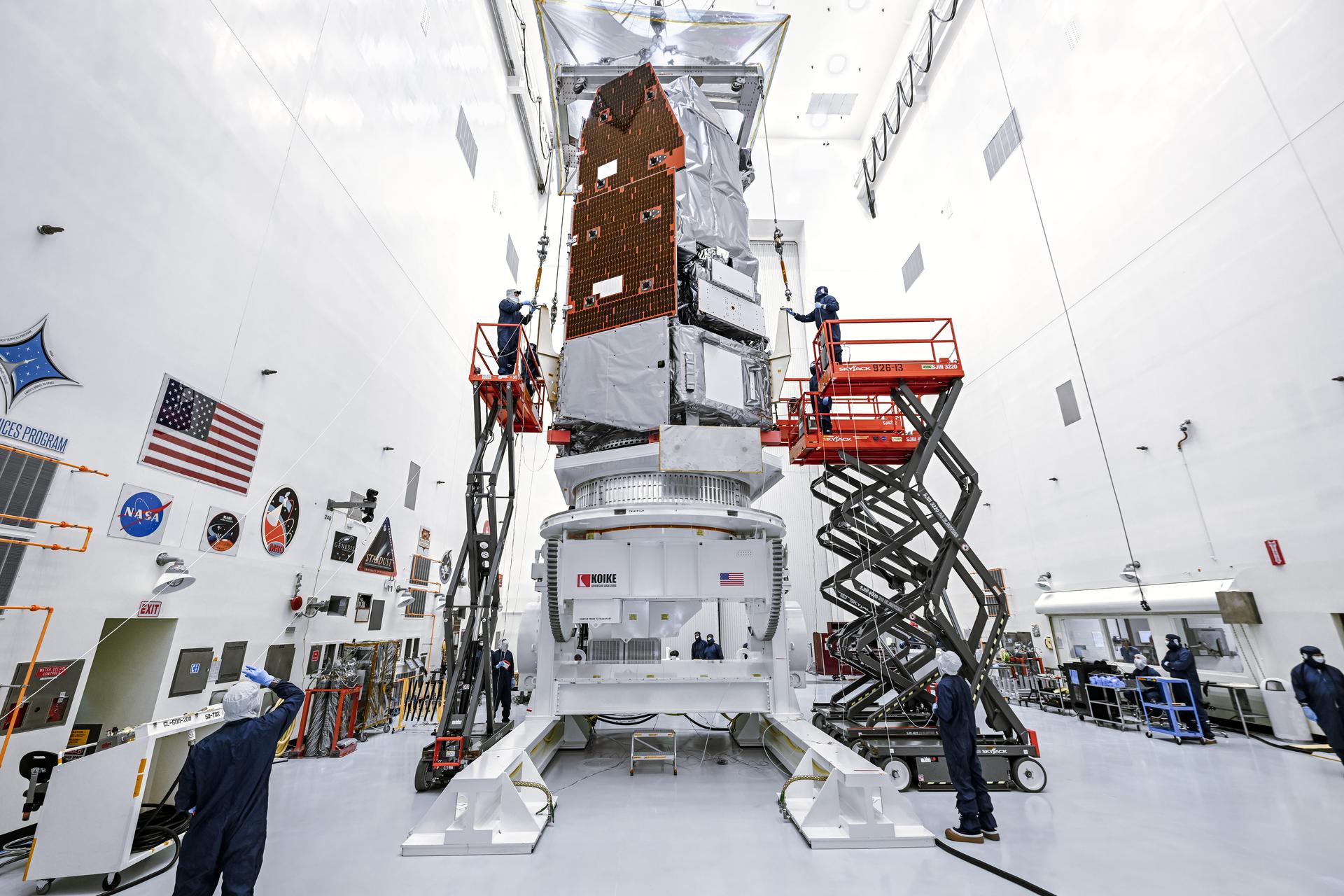 NASA’s Nancy Grace Roman Space Telescope arrives at Kennedy Space Center for prelaunch servicing — Image: NASA (Public Domain)
SpaceX & Commercial Space
-
Starship Florida Operations: Starship launches from Cape Canaveral are getting closer, with SpaceX and its contractors making significant progress toward activating the Florida launch pad for super-heavy lift operations.
-
ispace Partners with SpaceX: Japanese lunar exploration company ispace announced plans to send larger payloads to the Moon aboard SpaceX’s Starship, opening new possibilities for commercial lunar missions.
-
ElevationSpace Reentry Vehicle: A Japanese startup developing commercial reentry vehicles is signing up customers while keeping a watchful eye on SpaceX’s entry into the market, showing healthy competition in the space services sector.
Satellites & Constellations
-
Reflect Orbital Sunlight Satellite: The FCC approved its first satellite designed to reflect sunlight into nighttime regions. This experimental project, while controversial among astronomers and environmentalists, could enable new applications in agriculture and emergency response.
-
Nuclear Battery in Orbit: City Labs is testing tritium-powered electrical sources for satellites and lunar systems that could operate where solar power falls short — a potential game-changer for deep space missions.
-
Parabilis Propulsion: The Space Force is backing development of hybrid engine technology for maneuverable cubesats, promising enhanced capabilities for small satellite constellations.
-
European Space Industry Rebound: Earth observation satellites have now surpassed telecom satellites in European space industry sales, with 2025 showing significant recovery after 2024’s contraction.
Deep Space & Exploration
-
NASA’s Roman Space Telescope: The Nancy Grace Roman Space Telescope has arrived at Kennedy Space Center for prelaunch servicing. Set to launch in 2027, it will provide unprecedented wide-field infrared imaging of the cosmos.
-
James Webb 4th Anniversary: Celebrating four years of science operations, Webb revealed stunning new images of Centaurus A showing millions of stars previously hidden by dust — demonstrating how the telescope continues to transform our understanding of the universe.
-
China’s Long March 10B: China successfully launched and caught the Long March 10B rocket’s first stage using a drone — a significant advancement in reusable rocket technology.
-
China’s Commercial Space Consortium: The Chinese government unveiled its state-backed commercial space consortium membership list, indicating which companies Beijing considers established players in the sector.
Research & Discoveries
-
IXPE Maps Pulsar Magnetic Fields: NASA’s Imaging X-ray Polarimetry Explorer mapped the magnetic fields of PSR J1101–6101 within the Lighthouse Nebula for the first time, providing new insights into these extreme cosmic objects.
-
Planet Surviving Star’s Death: Webb studied WD 1856 b, a Jupiter-sized exoplanet orbiting a white dwarf, revealing how planets can survive the death of their host stars — a glimpse into the far future of our own solar system.
-
Hubble Captures Star-Studded Cluster: Hubble’s image of Messier 3 showcases one of the Milky Way’s most massive globular clusters, revealing ancient stars that formed billions of years ago.
-
Zooniverse Milestone: NASA-supported citizen science platform Zooniverse reached 1 billion classifications contributed by volunteers worldwide — demonstrating the power of public participation in astronomical research.
-
Nuclear Battery Technology: A new tritium-powered electrical source is being validated in orbit, potentially enabling long-duration missions to the Moon and beyond where solar power isn’t viable.
Key Takeaway
The space industry continues its remarkable acceleration in July 2026. SpaceX’s Starship program is moving toward operational status with Flight 13, while reusability records keep falling with each Falcon 9 launch. International competition is intensifying with China’s reusable rocket advances and Japan’s growing commercial space ecosystem. Meanwhile, groundbreaking discoveries from Webb, Roman, and IXPE are reshaping our cosmic understanding. The transition from government-led exploration to commercial space infrastructure is now undeniable — we’re witnessing the birth of a true space economy.
Images courtesy of NASA (Public Domain). News compiled from SpaceNews, Spaceflight Now, NASASpaceflight, NASA, ESA, and Ars Technica.