Space Tech Roundup - July 3, 2026
Here’s your Sunday space tech roundup for July 3, 2026:
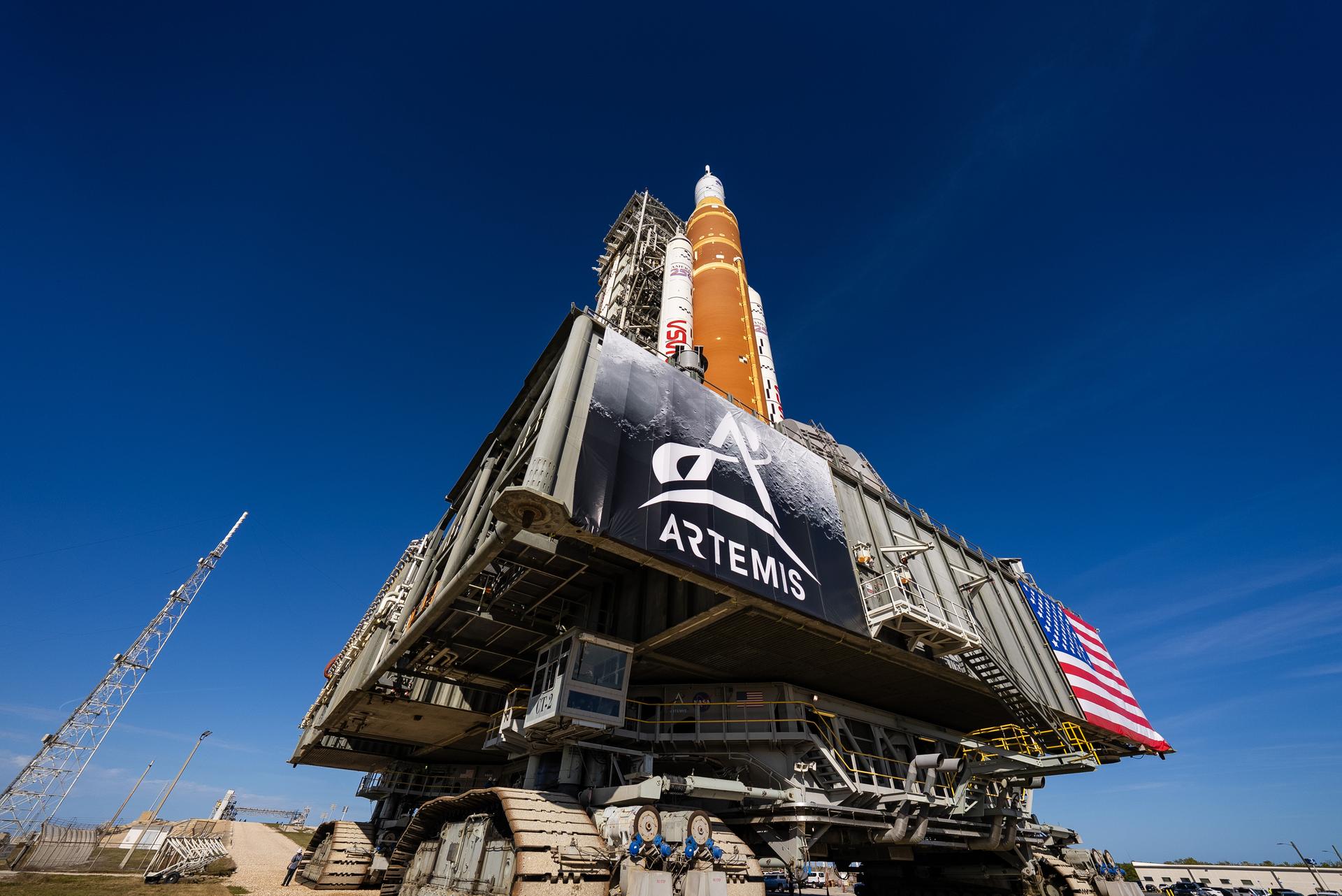 NASA’s massive SLS rocket and Orion spacecraft roll out to Launch Pad 39B at Kennedy Space Center in preparation for the Artemis II mission. Image: NASA/Sam Lott
Launches & Missions
-
Final Atlas 5 Amazon LEO Mission Launches Successfully: The final Atlas 5 mission for Amazon’s Project Kuiper constellation successfully launched on July 2, 2026, from Cape Canaveral. This marked the culmination of ULA’s work on deploying Amazon’s LEO satellites, as the company transitions to its own launch capabilities with the upcoming Vulcan Centaur rocket.
-
Isar Aerospace to Launch German-Built Planet Imaging Satellite: European launch provider Isar Aerospace has secured a contract to launch a German-built Earth imaging satellite for Planet Labs. The mission will fly on Isar’s Spectrum rocket from their launch site in Norway, expanding Europe’s small satellite launch capabilities.
-
Latitude Plans First Launch from Oman: French launch startup Latitude announced plans to conduct its first orbital launch from a new spaceport in Oman. This represents a strategic expansion of launch infrastructure into the Middle East, offering new equatorial launch opportunities for small satellite operators.
SpaceX & Commercial Space
-
SpaceX IPO Begins Trading on Nasdaq: In a landmark moment for the commercial space industry, SpaceX stock began trading on the Nasdaq exchange for the first time. The company’s public offering values it as one of the most valuable aerospace companies globally, reflecting investor confidence in its Starlink constellation and Starship development programs.
-
The SpaceX IPO Story - Market Impact: While the public trading marks a milestone, the deeper story is about SpaceX’s transformation from a scrappy startup to a dominant force in global space access. The company’s vertical integration strategy and rapid iteration approach have fundamentally reshaped launch economics.
-
Blue Origin Outlines New Launch Pad Approach: Following the May 28 New Glenn explosion, Blue Origin detailed a revised approach to Launch Complex 36 reconstruction. CEO Dave Limp emphasized that critical infrastructure survived the incident, and the company is implementing enhanced safety measures as it works toward a return to flight by late 2026.
Satellites & Constellations
-
Perovskite Solar Panel Startup Verde Technologies Shifts to Space: Verde Technologies, originally focused on terrestrial solar applications, has pivoted to space-grade perovskite solar panels. These next-generation panels promise higher efficiency and lower weight than traditional silicon cells, potentially revolutionizing satellite power systems.
-
Polish Space Tech Company Sybilla Technologies Enters U.S. Market: Sybilla Technologies secured significant funding to expand its space situational awareness (SSA) services into the United States. The company specializes in tracking space debris and satellite trajectories using AI-powered optical systems.
-
Making Satellite Communications More Resilient: A new report highlights the growing importance of resilient satellite communications infrastructure. With increasing threats from anti-satellite weapons and space weather events, operators are investing in constellation redundancy and rapid replenishment capabilities.
-
Orbital Files Plans for 100,000 Orbital Data Centers: In a bold vision for space-based computing, Orbital has filed regulatory plans for deploying 100,000 orbital data centers. These facilities would provide edge computing capabilities in space, reducing latency for satellite data processing.
Deep Space & Exploration
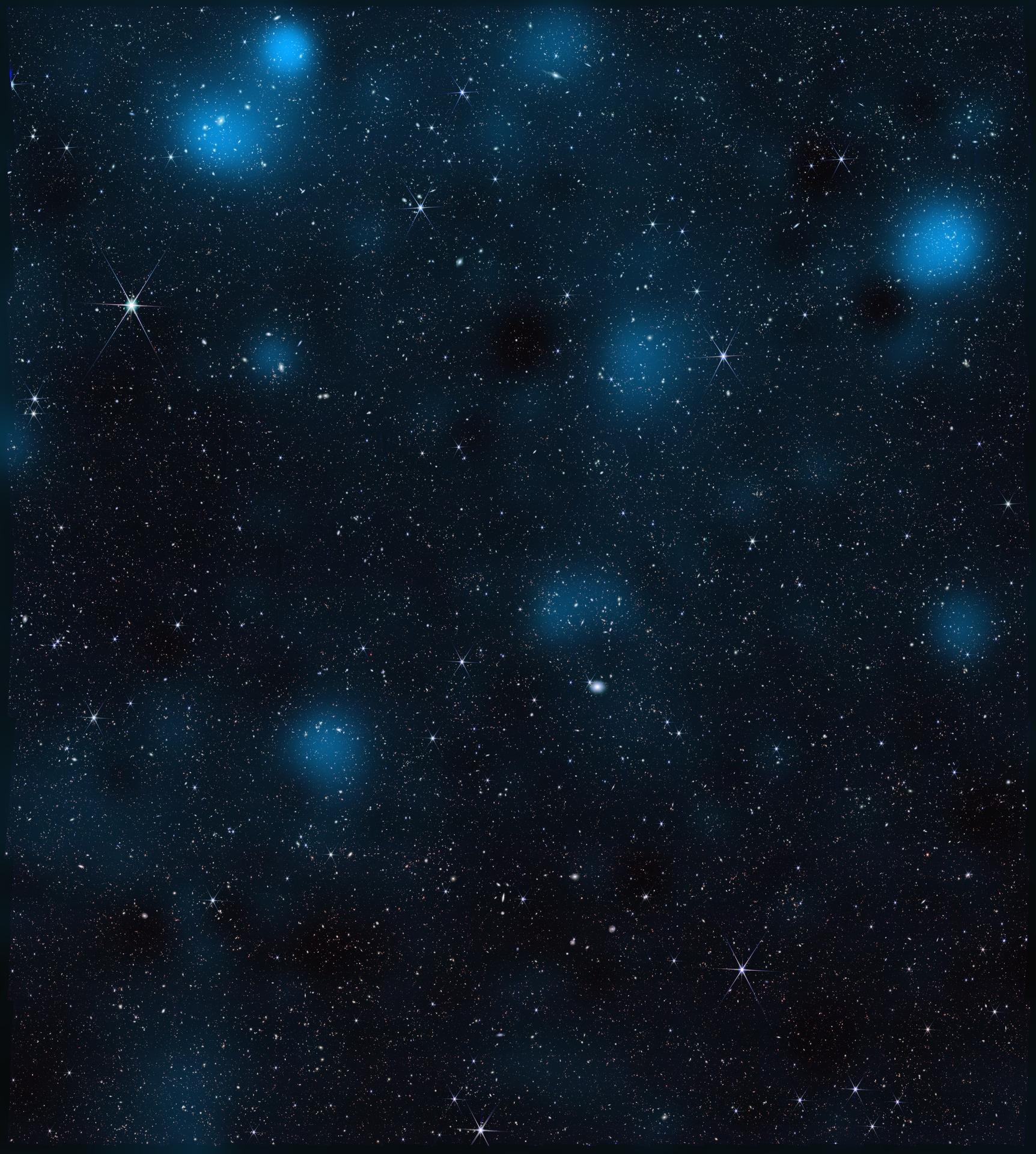 The James Webb Space Telescope continues to deliver stunning deep field observations, revealing distant galaxies and advancing our understanding of the early universe. Image: NASA/JPL-Caltech
-
NASA Awards Nearly $600 Million in Lunar Lander Missions: NASA has distributed nearly $600 million across multiple companies for lunar lander development and demonstration missions. This funding supports the agency’s Artemis program goal of returning humans to the Moon and establishing sustainable lunar exploration capabilities.
-
ESA Seeks Lunar Mapping Capability for Argonaut Lander: The European Space Agency announced plans to develop lunar mapping capabilities for its Argonaut cargo lander. This system will enable precision landing and hazard avoidance, critical for future lunar surface operations.
-
Rocket Lab to Acquire Iridium: In a major industry consolidation move, Rocket Lab announced its acquisition of Iridium Communications. Rocket Lab CEO Peter Beck called it the “logical next step” for the company, combining Rocket Lab’s launch capabilities with Iridium’s established satellite constellation and communications infrastructure.
-
Relativity Space Announces 2028 Mars Mission: Under new leadership from former Google CEO Eric Schmidt, Relativity Space unveiled its Interplanetary Sciences Program with a planned Mars orbiter mission for late 2028. The spacecraft will carry NASA’s Aeolus atmospheric profiling instruments and serve as a communications relay node.
Research & Discoveries
-
Discovering the Universe – Astrophysics Flagship Observatories: A comprehensive review of NASA’s flagship astrophysics missions highlights how observatories like Hubble, Chandra, and Webb continue answering fundamental questions about cosmic origins, dark matter, and the nature of black holes.
-
Study Argues Bigger Launch Vehicles May Not Always Be Better: New research challenges the assumption that larger rockets are always more cost-effective. The analysis suggests that for certain mission profiles, smaller, more frequent launches can offer better economics and operational flexibility than massive single launches.
-
Vantor Offers Up-to-Date Imagery with WorldView 3D: Vantor has launched a new service providing 3D Earth imagery using WorldView satellite data. The service offers centimeter-level accuracy for applications ranging from urban planning to disaster response.
-
Report Links Starliner Problems to Overconfidence: A comprehensive report on Boeing’s Starliner program identified overconfidence and unrealistic schedules as root causes of the spacecraft’s ongoing technical challenges. The findings highlight the importance of rigorous testing in human spaceflight development.
Key Takeaway
The space industry continues to evolve at a remarkable pace. SpaceX’s IPO marks a watershed moment for commercial space, validating the viability of private space companies at scale. Meanwhile, Blue Origin’s recovery from its setback and Rocket Lab’s acquisition of Iridium demonstrate both the risks and opportunities in this rapidly maturing industry.
On the exploration front, NASA’s $600 million lunar lander investment and ESA’s Argonaut mapping capabilities show international commitment to returning to the Moon. The diversity of approaches—from Orbital’s ambitious orbital data centers to Verde’s perovskite solar panels—illustrates how space technology is expanding beyond traditional launch and satellite markets into entirely new domains.
As we move through 2026, the space economy is proving its resilience and growth potential, with new players entering the market and established companies consolidating their positions. The next few years promise continued innovation as these developments mature.
All NASA images featured are public domain. Image attributions: NASA/Sam Lott (SLS rollout), NASA/JPL-Caltech (Webb telescope).